
Fire Safety Prosecution: Lessons from the Prestleigh Inn Case
8 August 2026
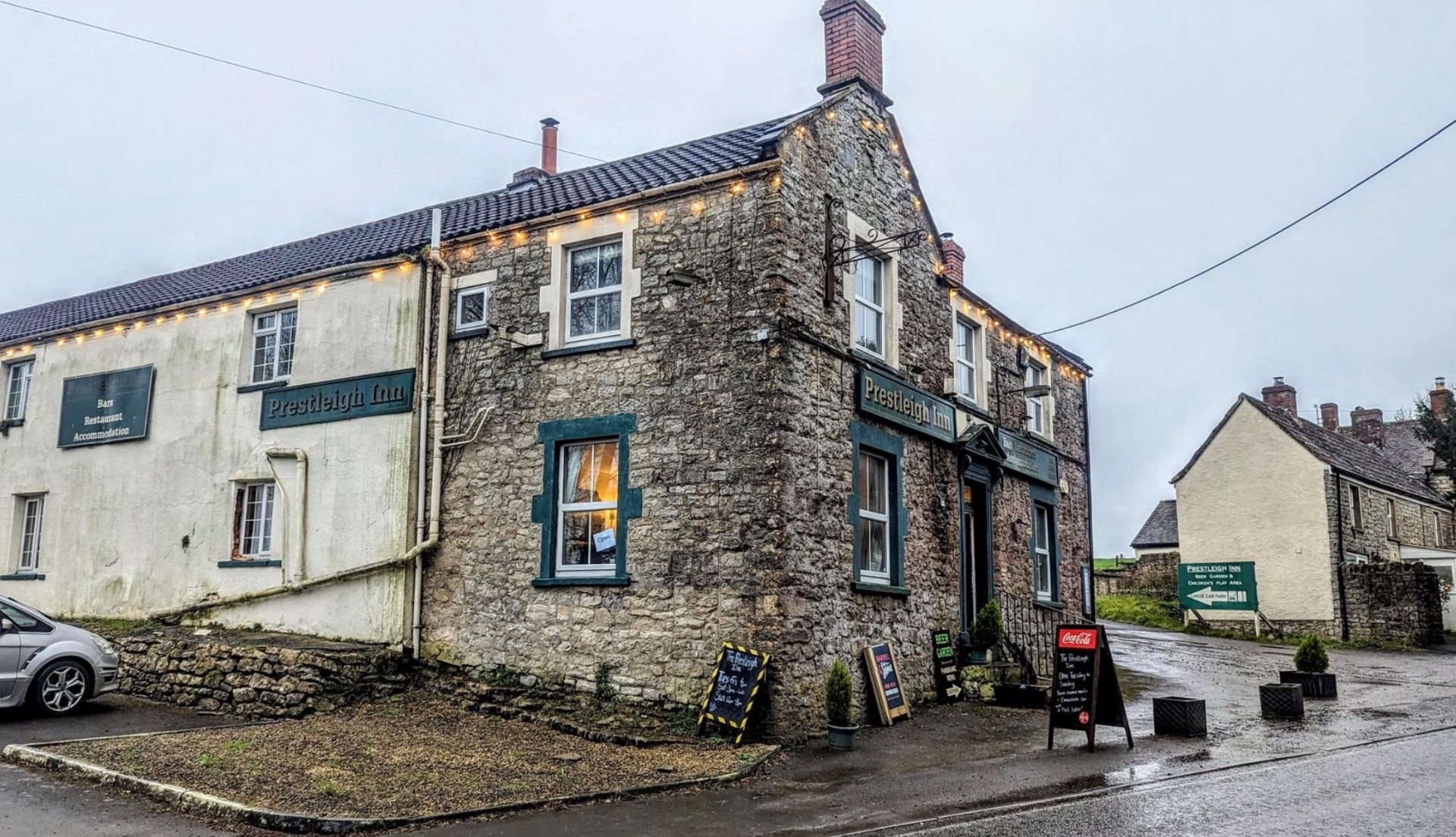
A Somerset guest house was fined £33,700 after failings including no suitable fire risk assessment and nine fire alarm faults. Key lessons for Responsible Persons.
In July 2026, Prestleigh Inn B&B Limited appeared before Taunton Magistrates'' Court and pleaded guilty to four offences under the Regulatory Reform (Fire Safety) Order 2005. The total financial consequence reported was £33,700. For a small hospitality business with five en-suite letting bedrooms, that is a significant sum — and it does not include the cost of prohibition, remedial works, lost bookings or reputational damage.
This article looks at what happened, what was found, and what business owners, landlords and Responsible Persons can reasonably learn from it. Where information comes from press reporting rather than the court record or the fire service enforcement register, we have described it as such.
What happened
The premises were operated at The Prestleigh Inn, Prestleigh Hill, Shepton Mallet, Somerset, alongside wider hospitality use. The investigation reportedly followed concerns raised by a guest rather than a planned inspection.
Devon and Somerset Fire and Rescue Service inspected the premises in May 2025. Some secondary reporting has given the inspection year as 2024, but the primary enforcement record — a notice dated 28 May 2025 — supports May 2025.
The inspection identified significant fire safety deficiencies and the fire service took enforcement action. Two Prohibition Notices were served, preventing the sleeping accommodation from being used until the immediate risks were addressed. The recorded remedial requirements included upgrading fire doors serving the first-floor guest accommodation to an appropriate FD30S standard, and reinstating and servicing the fire detection and warning system so that it operated satisfactorily without faults. The notice recorded a compliance date of 23 July 2025. The prohibition was subsequently withdrawn.
What was found
The reported deficiencies included:
No suitable and sufficient fire risk assessment.
A fire alarm system that was not operating correctly, with nine faults displayed on the control panel.
Inadequate routine maintenance of the fire alarm system.
Deficiencies involving fire doors.
Deficiencies affecting means of escape.
Inadequate maintenance arrangements for emergency lighting.
Inadequate maintenance arrangements for firefighting equipment.
These points should be read together. This was not a case about one faulty device or a missing certificate. It reflected a wider breakdown in the day-to-day management of fire safety.
The offences and the penalty
The company pleaded guilty to offences concerning Article 9 (fire risk assessment), Article 13 (fire detection and firefighting), Article 14 (emergency routes and exits) and Article 17 (maintenance).
The reported £33,700 comprised £26,000 in fines, a £2,000 victim surcharge and £5,700 in prosecution costs. Of the fines, £16,000 related to the Article 9 offence and £10,000 to the Article 13 offence. No separate financial penalty was reportedly imposed for the Article 14 and Article 17 offences.
Why the fire risk assessment carries so much weight
It would be wrong to read the £16,000 Article 9 fine as courts valuing paperwork above physical fire precautions. The better reading is that the fire risk assessment is the structured process through which risks and necessary precautions are identified, evaluated and managed.
Article 9 requires the Responsible Person to make a suitable and sufficient assessment of the risks to relevant persons. It is what identifies hazards, evaluates existing precautions, exposes deficiencies and determines what further measures are needed. Premises can contain alarms, emergency lighting, fire doors and extinguishers and still fail to comply if those measures have never been properly assessed, managed and maintained.
Recording is not optional for small businesses either. The Building Safety Act 2022 amended the Fire Safety Order, and section 156 strengthened the requirements around recording fire safety information. Responsible Persons must record their fire risk assessment and their fire safety arrangements, regardless of headcount.
Nine faults on the panel
The lesson here is not that every fault renders a system unusable — the effect depends on the nature and extent of the fault. But faults on a life-safety system must be investigated and appropriately addressed. Repeated or unresolved faults tend to indicate inadequate maintenance and may impair the protection the system is there to provide.
Sensible arrangements include routine user checks, periodic servicing by a competent organisation or person, recording faults, reporting them promptly, arranging corrective works and recording the repairs carried out. Faults should not simply be acknowledged or silenced at the panel and then left.
Maintenance is a continuing duty
Article 17 requires relevant fire safety facilities, equipment and devices to be subject to a suitable system of maintenance and kept in an efficient state, in efficient working order and in good repair. That covers detection and alarm systems, emergency lighting, fire doors, firefighting equipment and other measures provided for the protection of relevant persons.
The Prestleigh Inn case shows the link between assessment and maintenance clearly. Identifying suitable precautions is only part of compliance. Those precautions must continue to work.
Fire doors and sleeping accommodation
Fire doors are fundamental where people sleep. They can restrict the spread of fire and smoke and help protect escape routes while occupants get out. The enforcement action specifically required improvements to doors serving the first-floor guest accommodation. That matters because sleeping occupants may respond slowly to an alarm.
A fire risk assessment should therefore consider door construction and fire resistance where required, the condition of the door and frame, self-closing arrangements, smoke seals and intumescent protection, gaps, glazing, ironmongery, damage or unauthorised alterations, and whether the door protects an escape route or compartment boundary.
The real cost to the business
The £33,700 is only part of it. The company also faced loss of use of its sleeping accommodation following prohibition, remedial works, professional and legal costs, management time, lost bookings and revenue, reputational damage, fire service scrutiny and a criminal prosecution. For a small hospitality business, that total can comfortably exceed the cost of maintaining suitable arrangements in the first place.
New company, same responsibilities
Prestleigh Inn B&B Limited was incorporated in October 2024, and available commercial information indicates the lease commenced in November 2024. Fire service intervention followed roughly six months later.
Taking over an existing building does not mean the previous operator''s arrangements can be relied upon. A new operator should establish from the outset who the Responsible Person is, whether a suitable and sufficient fire risk assessment exists and reflects the current operation, what alarm system is installed and when it was last serviced, whether faults are outstanding, whether emergency lighting and firefighting equipment are maintained, whether fire doors and escape routes are suitable, what records exist, and what staff training and emergency procedures are required.
A practical check
Do you have a current and suitable fire risk assessment, and does it describe how the premises are actually used today? Have the significant findings been addressed or entered into an action plan? Is the fire alarm operating correctly, are outstanding faults being investigated, and is the system serviced at appropriate intervals? Is emergency lighting tested and maintained? Are fire doors suitable and in good condition? Are escape routes maintained and available? Is firefighting equipment maintained? Are tests, inspections, servicing and remedial works recorded? Have changes to the building, occupancy or operation triggered a review?
Where the answer is uncertain, that uncertainty is worth investigating.
The central lesson
Fire safety compliance is a management process, not a document. The Responsible Person needs to identify risk, provide suitable precautions, maintain them, record the right information and act when deficiencies come to light. The fire risk assessment should drive that process, not sit in a folder once it has been produced.
Where we can help
If you are unsure whether your existing fire risk assessment remains suitable for how your premises are used, we can help. Lumacore Group carries out fire risk assessments, fire alarm servicing and maintenance, fire door surveys, emergency lighting inspections and general fire safety compliance reviews for hotels, guest houses, HMOs, landlords and commercial operators.
No service can guarantee legal compliance on its own — but a properly conducted assessment, followed by maintenance and record keeping, gives you a defensible position and, more importantly, keeps people safe. Get in touch to discuss your premises.